Browsing a Korean market and shopping at one are two different trips. Browsing ends empty-handed; shopping means you need a kitchen to cook in. Travellers who get the order backwards end up carrying a softening bag of pork around Jongno for three hours. Decide where you will cook first, then go to the market.
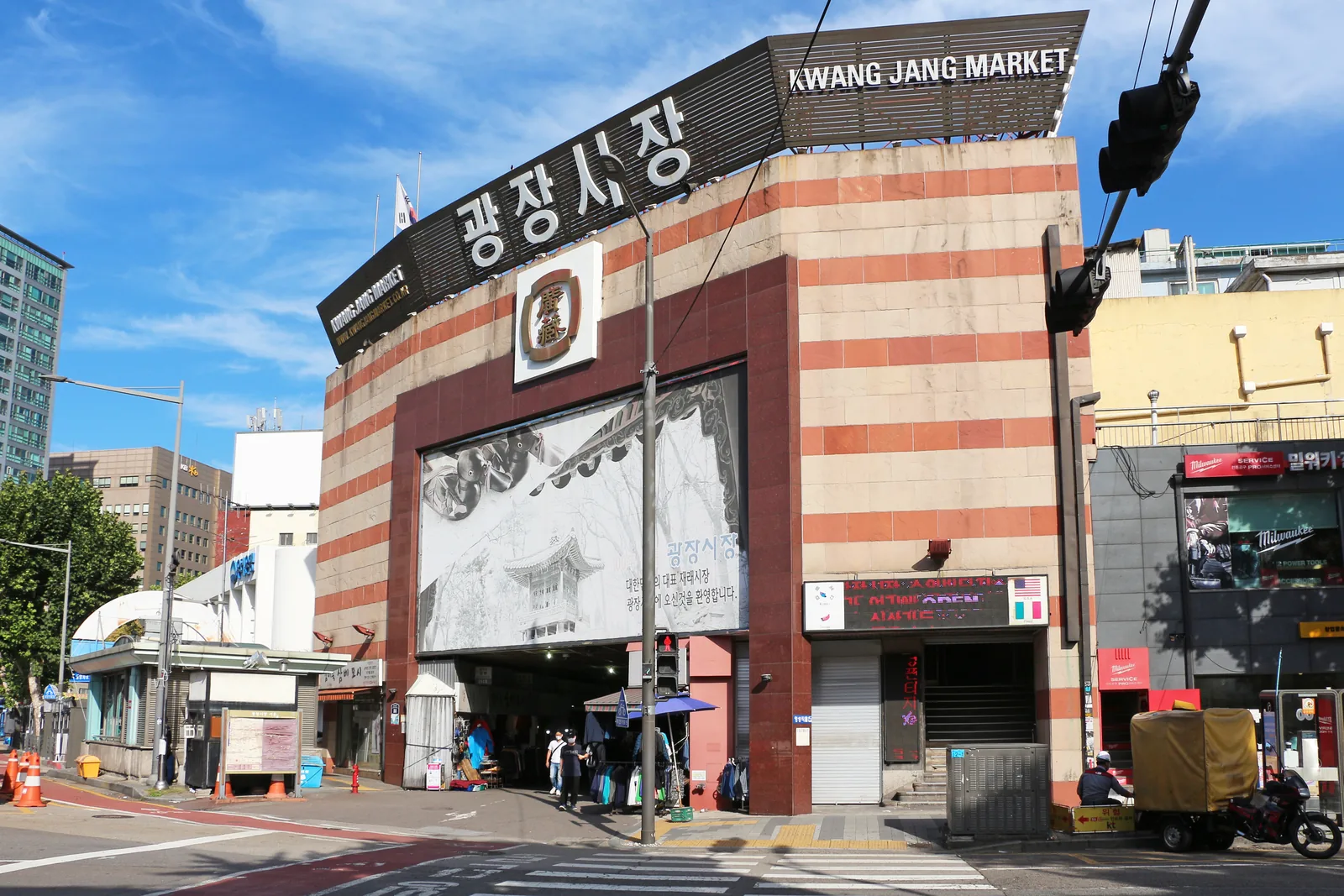
Settle the kitchen first
To cook what you buy, you need somewhere to cook it. Cooking studios rent kitchens by the hour, and plenty of hanok guesthouses and other accommodation allow guests to use a shared kitchen. Booking within walking distance of the market means you can carry everything straight back and start prepping. If you plan to buy seafood or meat, check before booking whether there is a refrigerator and how late the shared kitchen stays open — many close earlier than the building's front door.
What goes in the basket
- Base vegetables — napa cabbage, spring onion, garlic, onion, chilli
- Protein — pork belly and tofu. One pot of kimchi jjigae needs nothing more than these two
- Seasoning — gochugaru, a little doenjang or soy sauce, and dried anchovy or kelp for stock
- Side dishes — seasoned bean sprouts and spinach are faster bought than made, and most stalls sell them by weight
- Aged kimchi — some stalls sell it specifically for stew, so ask rather than assuming the fresh kind will do
Kimchi jjigae is aged kimchi, pork, tofu, spring onion and onion simmered in one pot. If it tastes flat, adjust with salt or guk-ganjang; if it is too hot, add water. Serve it with the side dishes you bought and the meal is done — no recipe card required.
Haggling, and the ingredients you have never seen
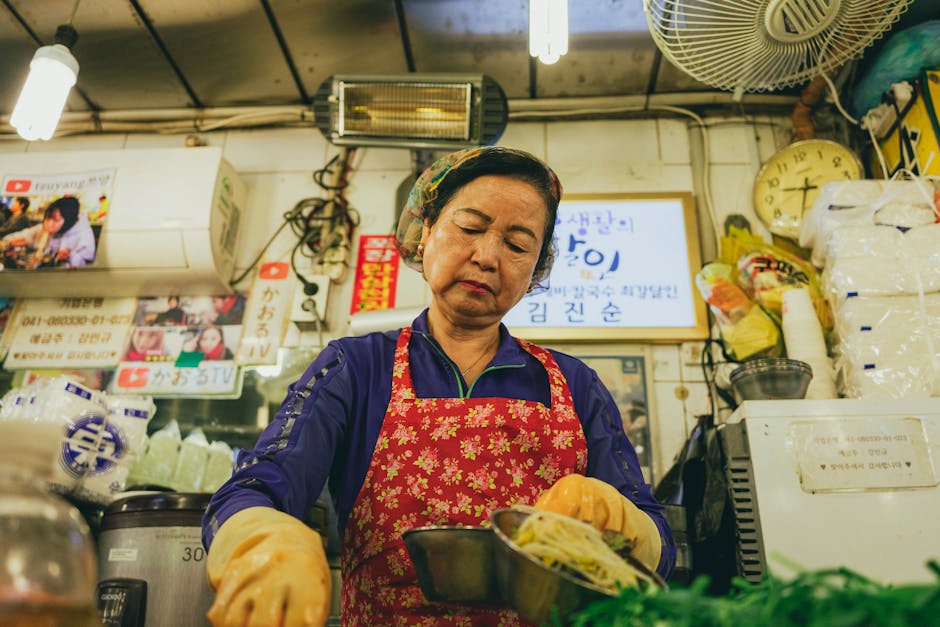
Prices differ slightly from stall to stall, so "jogeumman kkakka juseyo" — knock a little off — is simply the grammar of the market. You may be refused with a joke, or handed something extra. For ingredients that rarely appear in Western supermarkets — gondeure, doraji, minari — asking the vendor how to cook it is faster than searching online. Show interest and most will explain, and often push a taste at you before you decide.
The days you do not shop at all
If cooking is not the point, a single loop of bindaetteok, mayak gimbap, yukhoe bibimbap and sundae-guk fills an afternoon. Gwangjang Market has many stalls that open before dawn, so the early morning shopping hours are the quietest, and the clothing, fabric and sundries sections keep the loop from getting repetitive. Confirm price and portion before ordering, and ask about ingredients if you have allergies. In the busier lanes, expect to eat standing or perched on a small stool while a single portion is cooked in front of you.
Routes through each market, the order to eat in, and which aisle holds which ingredient are broken down market by market in the traditional market shopping write-up on the WeBring blog.