Korea's "bang" venues look like a long list, but the decision is actually one question: with the time and money you have right now, which door do you open? An hour and KRW 5,000 points to a PC bang or a manhwa bang. An hour, KRW 20,000 and a group points to a noraebang. Thirty minutes alone points to a coin noraebang. Fix the budget and the category picks itself.
What each one costs
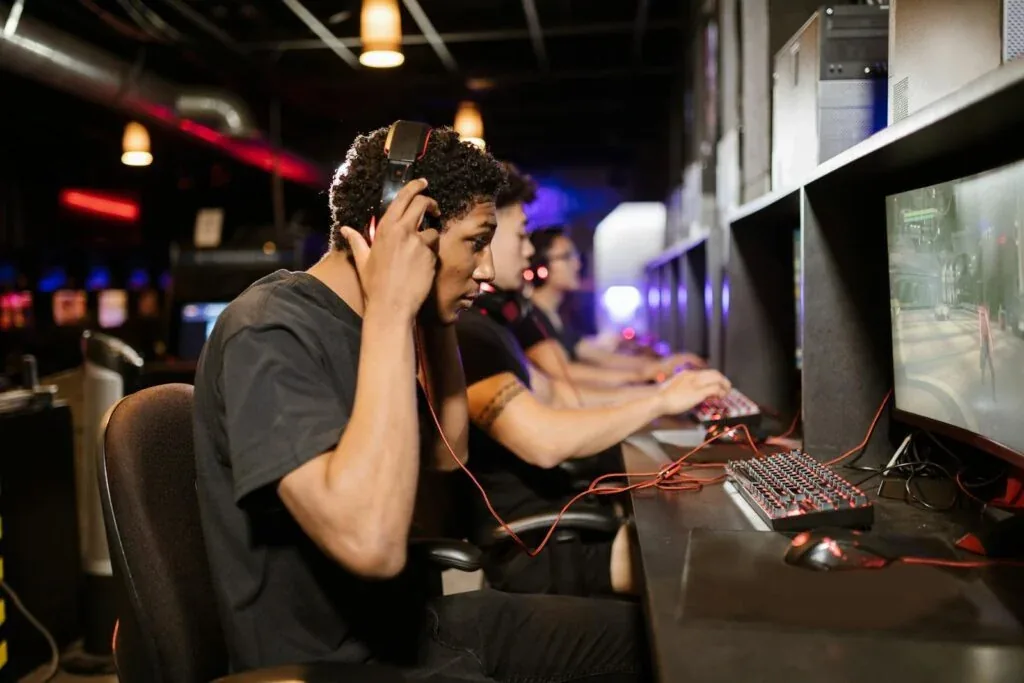
- PC bang — KRW 1,500–2,000 per hour as a weekday daytime budget. You can order ramyeon, fried rice or donkatsu to your seat
- Noraebang — priced per room, so two to four people singing for an hour lands around KRW 10,000–20,000
- Coin noraebang — KRW 500–1,000 per song. A single booth, which is why solo travellers use it without hesitating
- Manhwa bang / manhwa cafe — KRW 2,000–3,000 an hour. Compare three- and five-hour packages against how long you will really stay
- Study room / study cafe — KRW 2,000–4,000. Calls only in the booths that permit them
- DVD bang — around KRW 10,000 per room. Numbers have fallen since streaming arrived, so what survives varies by district
Every figure above is an illustrative budget and differs by branch. Even categories known for 24-hour trading vary location by location, so check the hours before planning a late-night stop.
Why PC bangs are still here
PC bangs grew rapidly in the late 1990s alongside the online gaming boom, at a time when high-spec computers and fast internet were not yet common in Korean homes. Both are ordinary now, and PC bangs survive for two reasons: some venues offer graphics hardware and network connections suited to the games people actually play, and they package the whole environment — gaming chairs, headsets, food carried to your seat. At the counter you are assigned a seat and pay by prepaid top-up or at the end. Some games require your own account or identity verification, so check what your game needs before you sit down. For travellers, a PC bang is also a cheap place to clear email or sort photos out of the rain.
Where foreign visitors get stuck in a noraebang
In a standard noraebang you search for songs on a touchscreen and sing from the room's own machine. Whether a recent release is loaded depends on the equipment vendor and its update schedule, so if there is a specific song you came for, ask at the counter before taking a room. Evenings are busy because noraebang is the classic second stop after a company dinner, and rooms can be full. Alone, a coin noraebang is far easier — you pay by song and leave when you want. Tambourines and standing microphones are common enough that you do not need to bring anything.
Why there are so many "rooms" in the first place
The bang is what you get when compact city housing, a day that runs late into the night, and a culture of spending time with friends and colleagues all overlap. Homes are small, so people meet outside — and when they meet outside, they rent a space with no one else's eyes in it, by the hour. That is also why a manhwa bang in the middle of a business district doubles as somewhere to nap.
Entry procedures, payment methods and how to order to your seat are laid out category by category in the room culture write-up on the WeBring blog.