The question foreigners actually get stuck on is not how to bow but when. Seated bows belong to ceremonies — Seollal greetings, ancestral rites, weddings — while everyday encounters end with a standing bow from the waist. Miss that line and you either kneel when nobody expected it, or stay on your feet while an entire family bows around you.
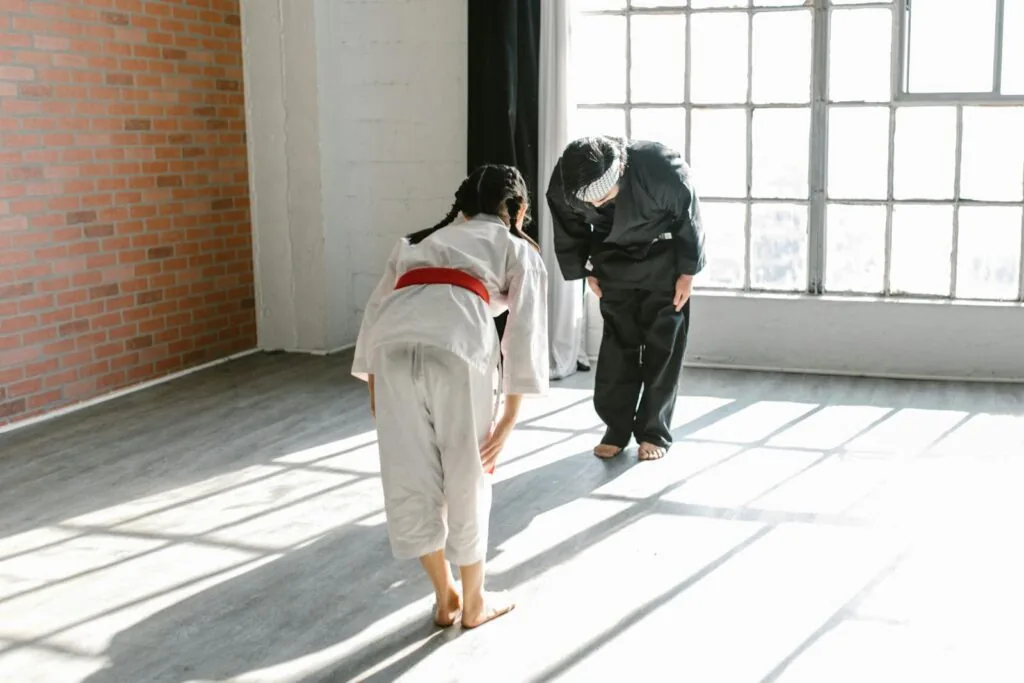
Where the seated bow ends and the standing greeting begins
A bow raises the other person and lowers yourself, and the exact form follows the occasion and the family's custom. Korean bowing predates Joseon, and Confucian ritual manuals later systematised the ceremonial shapes. That is why there is no single correct version — only the version used at that event.
- Keunjeol, the deep bow — holidays, ancestral rites, weddings, and to parents and ancestors. Men kneel on both knees and lower the head until the forehead reaches the back of the hands
- Keunjeol for women — the commonly taught form raises the joined hands above the eyebrows, then sits and bows with the hands still raised
- Pyeongjeol, the seated bow — for meeting elders, with less ceremony than a keunjeol
- Standing bow — everyday life. A small bend at the waist plus a polite greeting
Guides that describe pyeongjeol as "the standing version" are wrong: pyeongjeol is also performed seated. If your knees or back make kneeling difficult, use whatever movement you can manage — and at a ceremony, follow the host or the etiquette instructor rather than something you read online.
Sebae at Seollal: the person receiving the bow has duties too
On Seollal morning, after the family rite, children and grandchildren offer sebae — a keunjeol — and say "Saehae bok mani badeuseyo." The elder answers with a word of blessing or with money. A bow is not one person bending. It only works if the person receiving it holds a courteous posture as well, which is why you will see elders sit up straight and answer rather than simply accept.
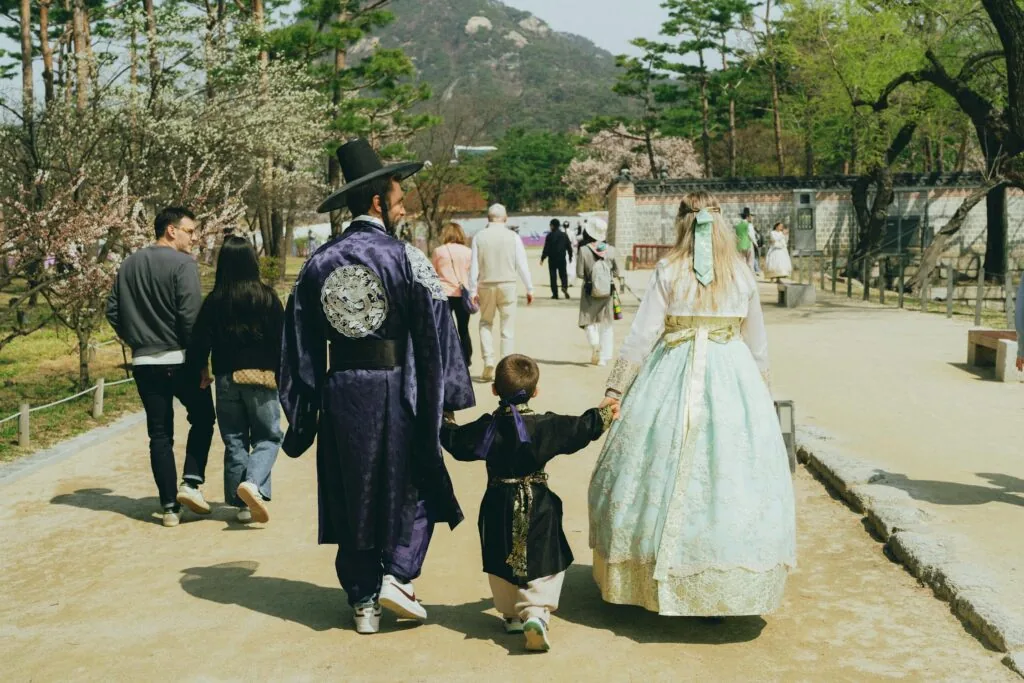
What you will actually use every day
- Eyes — with elders or senior colleagues, Koreans tend to soften the gaze rather than hold direct eye contact. It reads as courtesy, not evasion
- Speech — use jondaetmal when you first meet someone, and choose between the -haeyo and -hamnida registers depending on how formal the setting is
- Titles — use the title that fits the relationship, and simply ask what to call someone when you are unsure. "Abeonim" belongs to family contexts; it is not a general word for any older man
- Hands — pass and receive objects, and pour or accept drinks, with both hands
- Meals — wait until the eldest person at the table has picked up their spoon
Younger Koreans hold the formal shapes loosely, but weddings, funerals, holidays and your first day at a company still run on this sense of order. A slight bow when a manager walks in and a two-handed pass of a business card are the two habits that get noticed first.
Step-by-step postures for keunjeol and pyeongjeol, split by gender and occasion, are laid out in the bowing and greeting write-up on the WeBring blog.