When sending money abroad from Korea, comparing the advertised transfer fee alone can hide the real cost. Check the amount the recipient will actually receive after the transfer fee, intermediary or receiving-bank charges, and the exchange-rate margin are all included.

Information to prepare for a bank transfer
A bank branch or mobile app will generally ask for the recipient's name in English, account number, bank name and address, and SWIFT/BIC code. Some destinations also require an IBAN. A mismatch can delay or return the payment and may trigger extra fees, so copy the recipient's current banking details exactly.
- Bank transfers are familiar and traceable, but charges from the sending, intermediary, and receiving banks may accumulate.
- If a fee option is offered, check how sender-paid, shared, or recipient-paid charges change the final amount delivered.
- For a new recipient, send a small test payment first and transfer the balance only after receipt is confirmed.
How to compare fintech services
Overseas-transfer services such as Hanpass and Wise often display an estimated fee, exchange rate, and delivery time before confirmation. Supported countries and currencies, transaction limits, and identity-verification requirements for foreign residents differ by provider. Compare the quoted amount arriving in the recipient's account for the same amount of Korean won, not just the headline fee.
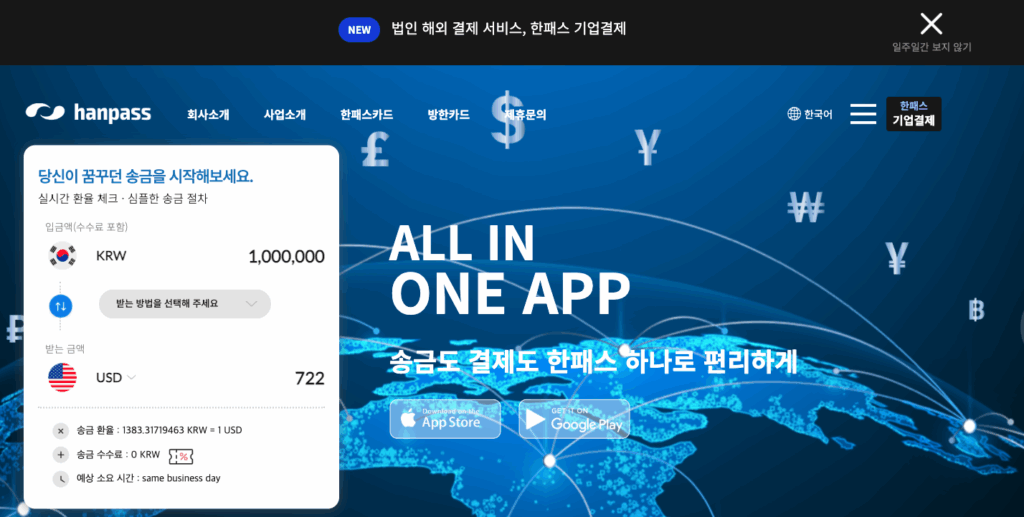
Exchange rates and safety checks
A Korean bank's exchange-rate preferential rate usually means a discount on its currency-exchange spread; it is not a discount on the market exchange rate itself. A promotion therefore does not automatically produce the best total result. Fees, limits, and supported corridors change, so confirm them in the provider's official app or with customer service immediately before sending.
Using cryptocurrency to move funds can introduce price volatility, exchange withdrawal restrictions, anti-money-laundering reviews, and tax or legal issues. It is generally not a suitable substitute for an ordinary living-expense transfer. Use a licensed or registered bank or remittance provider, and avoid unsolicited requests to send money to personal accounts or messages promising a guaranteed exchange rate.
Quick takeaway
Verify the recipient and destination first, compare the final delivered amount, and use a small test transfer for a first-time payment.
Read the full overseas transfer and currency exchange guide →