Rural volunteering in Korea does not work on a walk-up basis. A half-day helping-hands session is a programme you apply to and get approved for before you travel. The most common mistake is reading a news article about a corporate volunteer group and heading for that village: the article is not a recruitment notice for individual travellers, and the farm in it is usually not accepting any.
Where to apply
Start with the current recruitment notices on the 1365 Volunteer Portal (1365.go.kr). Local volunteer centres and regional agricultural cooperatives also recruit separately. Once you find a notice, ask these questions before you submit anything.
- Whether half-day participation is actually offered — some hosts only take full-day shifts
- Eligibility — age, visa status, and any cap on numbers
- What language the day runs in; many sites operate in Korean only
- Whether transport, meals, insurance and equipment are provided, or whether you bring your own
Travel only after you have written confirmation. The familiar "work in the morning, look around the village in the afternoon" schedule is an example of how a day can go, not a bookable product you can reserve on demand.
What autumn actually assigns you
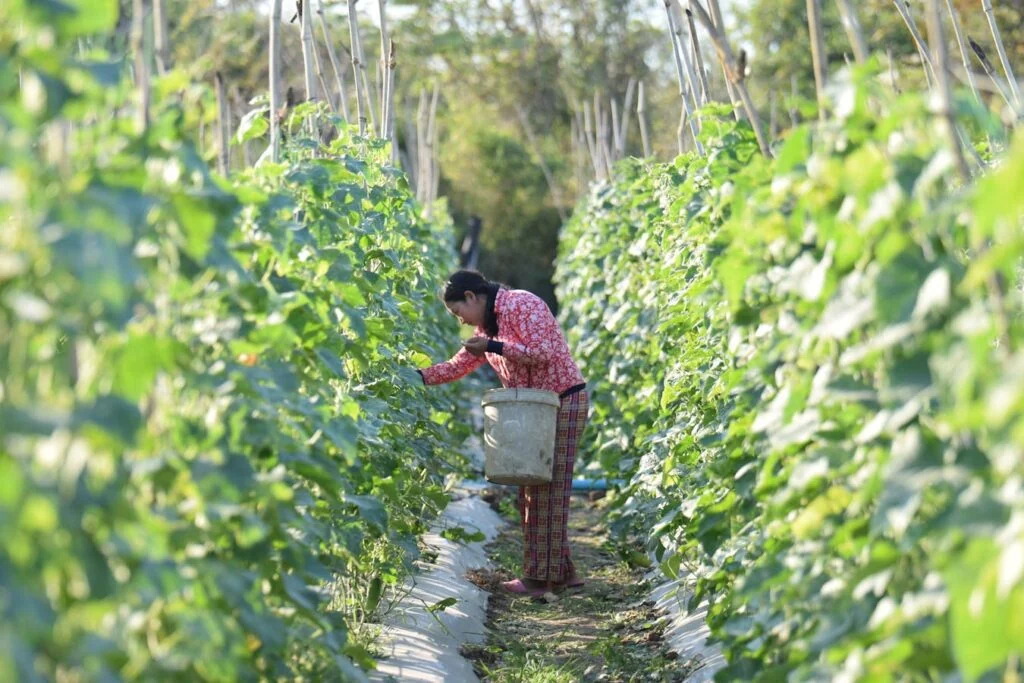
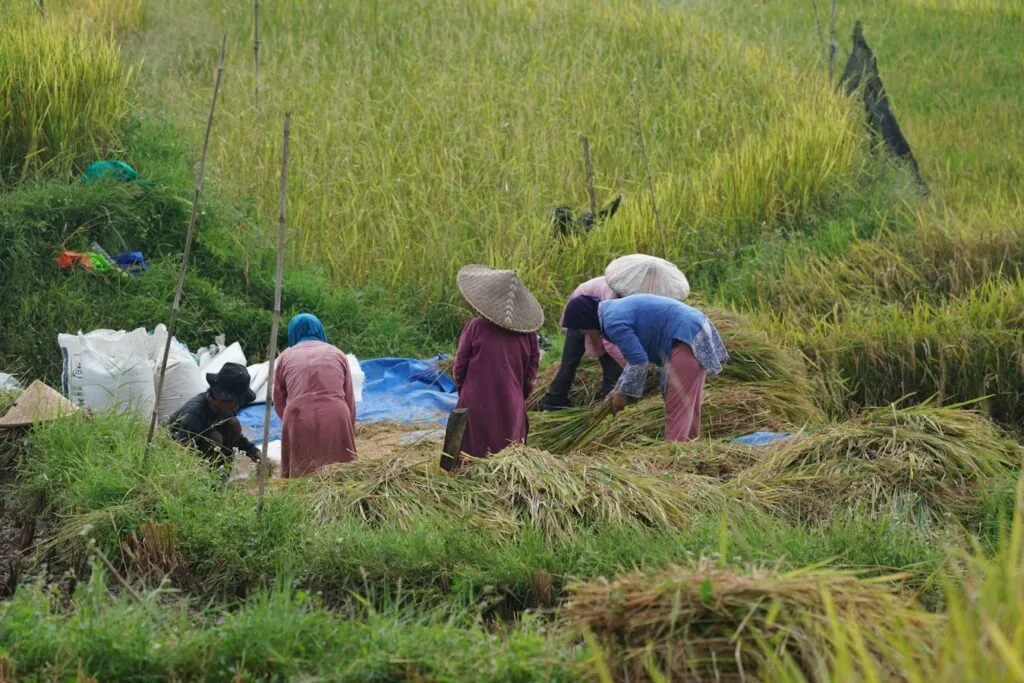
The work depends on the season and the crop. Spring brings rice planting, seedling work and clearing greenhouses; summer means weeding, thinning and fruit picking; autumn is rice harvesting, apple and pear picking, and helping with kimjang. Winter tends to be greenhouse work under supervision. Summer is the physically hardest stretch by a clear margin, and autumn sits in the middle — long hours bent at the waist, but without the heat.
What to bring, and what not to touch
- Rubber boots, work shoes, or trainers with a thick sole — you will be standing in soil and water all morning
- A hat and arm sleeves, against sun and insects
- A rain poncho, a change of clothes, and more water than you think you need
On arrival you take the coordinator's safety briefing first. Do not operate farm machinery, handle pesticides, or service equipment without training and permission. In a heatwave or bad weather, postpone the heavy work, rest often somewhere cool, and drink steadily. If your body starts complaining, stop and ask to be moved to lighter work — hosts expect this and would far rather reassign you than deal with an injury. Clear the site before you leave.
What is left when the half day ends
In villages where the population has aged, the shortage of hands during the farming season is a concrete problem, not a sentiment. Even half a day of help matters to the household hosting you, and working shoulder to shoulder makes conversation with strangers unusually easy. Eating at a village restaurant afterwards, or buying at the direct-sale stand, sends the same trip through the local economy a second time — buying the fruit you just picked, straight from the farm, is the simplest version of that.
Seasonal task types, how demanding each one feels, and the regions best suited to them are collected in one table in the farm volunteering write-up on the WeBring blog.