Jeonju is practically two destinations depending on the season. Spring cherry blossom and autumn ginkgo change the route, the festivals and the food alike.

Spring, March to May — start at the stream
From late March to early April, cherry blossom fills the stream bank beside the Hanok Village.
The order: walk the village's main alleys early, before the crowds; lunch in the Jeondong area on Jeonju bibimbap or bean-sprout soup; then stroll Jaman Mural Village in the afternoon and finish along Jeonjucheon Stream.
- The best spring photographs are on the stone-wall path by Gyeonggijeon and along Eunhaeng-ro
- May brings the Jeonju International Film Festival, with screenings and outdoor performances
- Book a hanok stay at least two weeks ahead, and three for a peak-season weekend
Autumn, September to November — come down from Deokjin Park
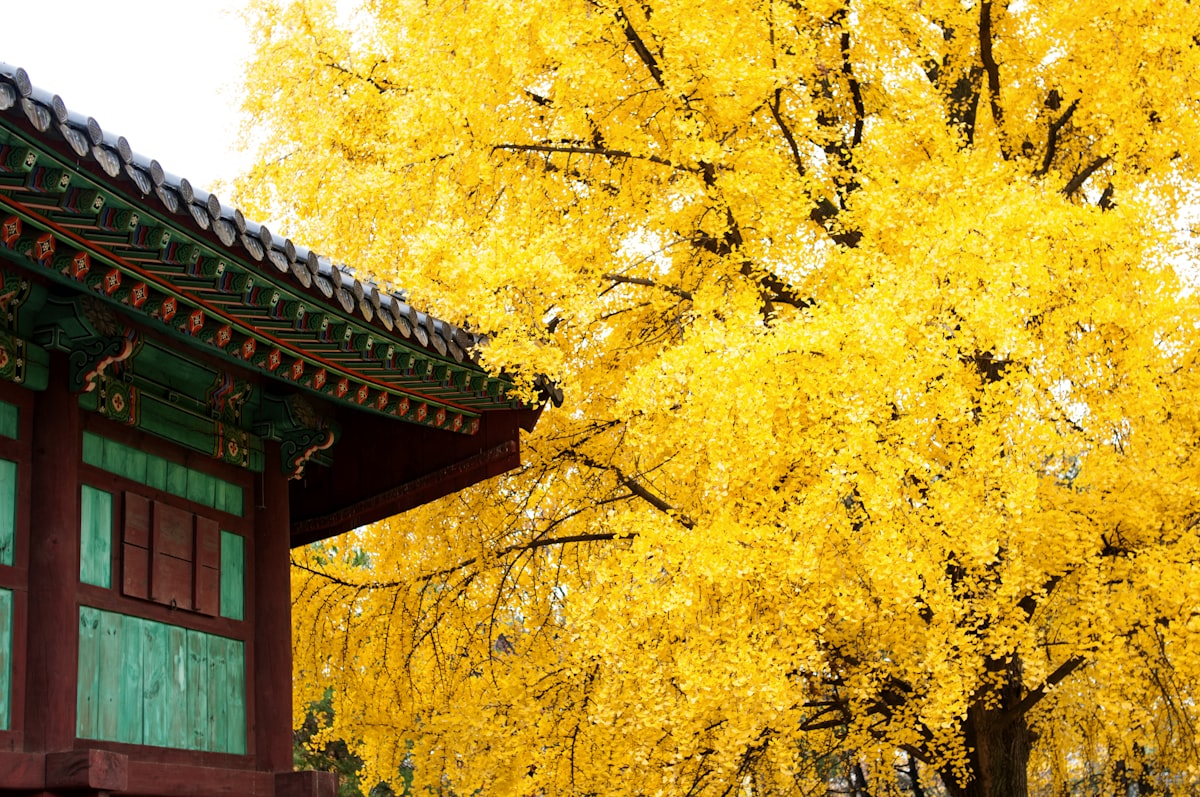
From mid-October to early November, Eunhaeng-ro turns bright yellow, and Deokjin Park's lotus pond sets off sharply against the autumn sky.
The order reverses. Deokjin Park in the morning, down toward Jeonjucheon for lunch, then Gyeonggijeon and Jeonju Hyanggyo slowly in the afternoon.
Autumn evenings are the night market
The Nambu Night Market runs every Friday and Saturday. With the Youth Mall alongside, it is worth queueing for stir-fried bibimbap, blood sausage and handmade skewers.
Temperatures fall sharply by early November. Bring a light padded jacket or a windbreaker.
Getting there, and the budget
About 1 hour 20 minutes from Seoul by KTX, then a 5-minute taxi from Jeonju Station to the village — a day trip works.
The village is walkable; you only need a bus or taxi to reach Deokjin Park. 20,000-30,000 won a day covers food comfortably, and prices drop noticeably one block off the busiest streets.
Season-by-season detail is on the WeBring blog.